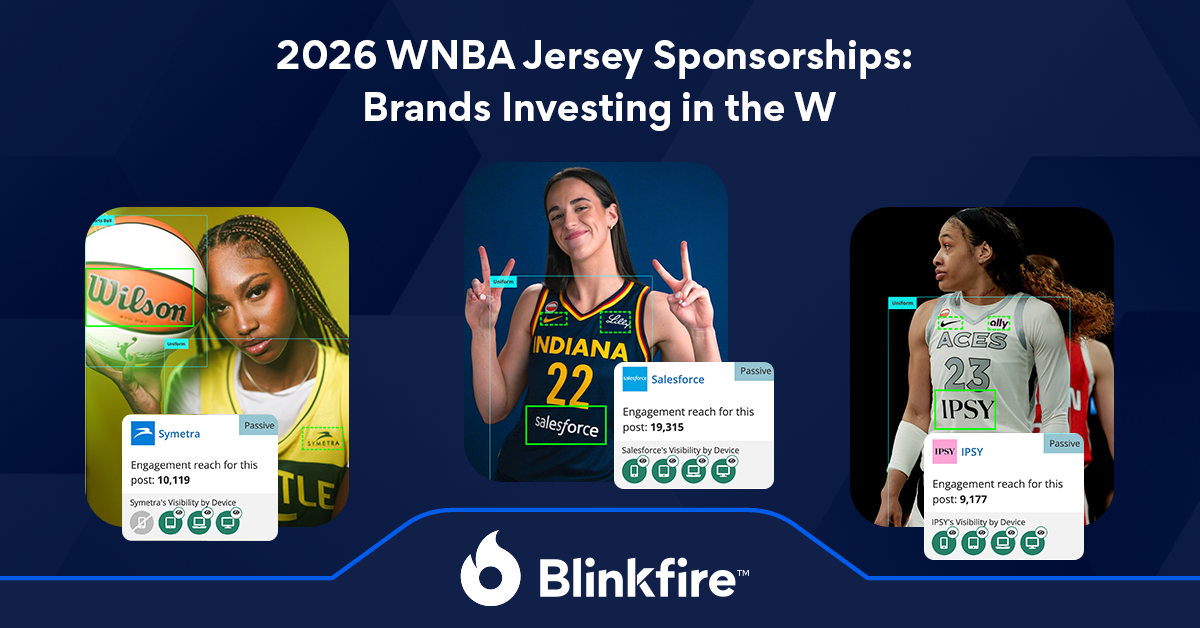
Jersey sponsorships are now commonplace in the US across major leagues such as the NWSL, NBA, MLB, MLS, and NHL. In the WNBA, there are three jersey sponsor placements: jersey patch, front-of-jersey, and back-of-jersey. These jersey placements are more than just ad space. They now serve as a high-visibility test for which corporations are genuinely putting their capital behind the long-term growth of women’s athletics. Thanks to the spotlight and personalities of stars such as Caitlin Clark, Paige Bueckers, and Angel Reese, brands want in on the attention that the WNBA is attracting.
Dive into the 2026 WNBA jersey sponsorship landscape to analyze the brands driving the league’s commercial evolution, the industries investing in women’s sports, and example social posts from every team!
Finance Dominating the WNBA
The finance industry makes up 28% of all jersey sponsors across the league, with seven brands. Brands like Ally, Barclays, and Salesforce are capitalizing on the league’s momentum and its growing fan engagement. Healthcare follows with 5 brands, and the beauty industry now has three brands on WNBA jerseys (Lashify, Sephora, and Ipsy).
One Brand, Three Teams
Albert is the only brand to appear on three different jerseys: the Atlanta Dream, Dallas Wings, and Los Angeles Sparks. This strategy suggests a deep-rooted belief in the league’s long-term commercial value and cultural impact, as well as a brand awareness play in these two markets.
AT&T’s Back-of-Jersey Monopoly
While team-specific jersey real estate fluctuates, AT&T has secured a permanent position on the league-wide back of jersey across all 15 franchises. This partnership embeds the brand into the narrative of equity and progress that defines the WNBA. As the league continues its historic growth, the reach of the partnership scales automatically, ensuring the brand captures high-value exposure during every exciting moment on the court.
WNBA Team Jersey Sponsors
Explore each WNBA team’s jersey partnerships in our Blinkfire playlist and listed below:
Atlanta Dream
Jersey Patch: Albert
Chicago Sky
Jersey Patch: Magellan Corporation
Front of Jersey: University of Chicago Medicine
Connecticut Sun
Front of Jersey: Yale New Haven Health
Dallas Wings
Jersey Patch: Albert
Front of Jersey: CVS
Golden State Valkyries
Jersey Patch: Chase Freedom
Front of Jersey: Kaiser Permanente
Indiana Fever
Jersey Patch: Lilly
Front of Jersey: Salesforce
Las Vegas Aces
Jersey Patch: Ally
Front of Jersey: Ipsy
Los Angeles Sparks
Jersey Patch: Albert
Front of Jersey: UCLA Health
Minnesota Lynx
Front of Jersey: Mayo Clinic
New York Liberty
Jersey Patch: Barclays
Front of Jersey: Liberty Mutual
Phoenix Mercury
Jersey Patch: Hero Bread
Front of Jersey: Fry’s
Portland Fire
Jersey Patch: Chime
Front of Jersey: Lashify
Seattle Storm
Jersey Patch: Symetra
Front of Jersey: Providence Swedish
Toronto Tempo
Jersey Patch: Sephora
Front of Jersey: CIBC
Washington Mystics
Jersey Patch: Carmax
Front of Jersey: Vanda Pharmaceuticals
Track and Value Your Sponsorship Assets with Blinkfire
Our AI technology empowers rights holders, media companies, and brands to measure sponsorship value with precision across social, digital, web, app, broadcast, and streaming. Using advanced computer vision technology, we’re proud to deliver real-time insights to optimize fan engagement and sponsorship performance.
Written by
–
May 20, 2026
– 41 Views
PakarPBN
A Private Blog Network (PBN) is a collection of websites that are controlled by a single individual or organization and used primarily to build backlinks to a “money site” in order to influence its ranking in search engines such as Google. The core idea behind a PBN is based on the importance of backlinks in Google’s ranking algorithm. Since Google views backlinks as signals of authority and trust, some website owners attempt to artificially create these signals through a controlled network of sites.
In a typical PBN setup, the owner acquires expired or aged domains that already have existing authority, backlinks, and history. These domains are rebuilt with new content and hosted separately, often using different IP addresses, hosting providers, themes, and ownership details to make them appear unrelated. Within the content published on these sites, links are strategically placed that point to the main website the owner wants to rank higher. By doing this, the owner attempts to pass link equity (also known as “link juice”) from the PBN sites to the target website.
The purpose of a PBN is to give the impression that the target website is naturally earning links from multiple independent sources. If done effectively, this can temporarily improve keyword rankings, increase organic visibility, and drive more traffic from search results.